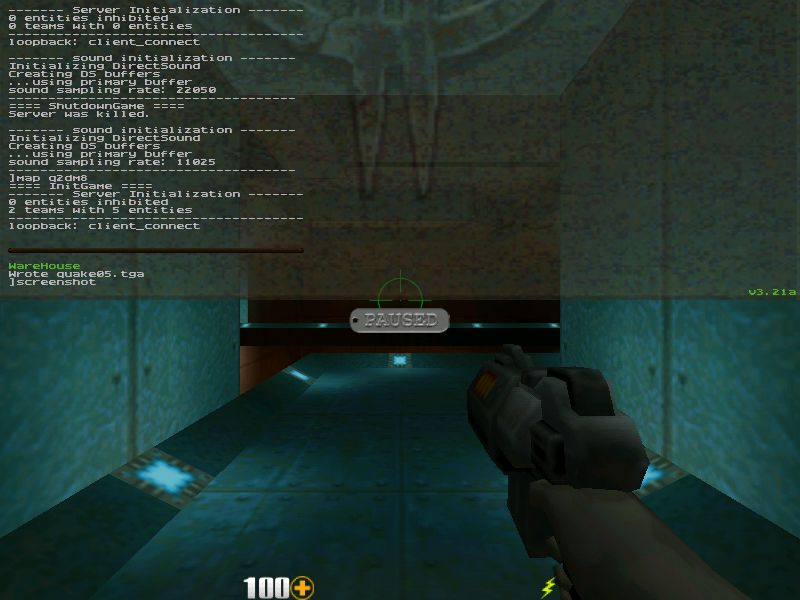
Look at this function Draw_FindPic in gl_draw.c.
image_t	*Draw_FindPic (char *name)
{
	image_t *gl;
	char	fullname[MAX_QPATH];

	if (name[0] != '/' && name[0] != '\\')
	{
		Com_sprintf (fullname, sizeof(fullname), "pics/%s.pcx", name);
		gl = GL_FindImage (fullname, it_pic);
	}
	else
		gl = GL_FindImage (name+1, it_pic);

	return gl;
}
All we need to do here is to make it look for .tga files first. If it finds one, then all well and good, otherwise we'll go and look for a .pcx.
Change the function like so:
image_t	*Draw_FindPic (char *name)
{
	image_t *gl;
	char	fullname[MAX_QPATH];

	if (name[0] != '/' && name[0] != '\\')
	{
		Com_sprintf (fullname, sizeof(fullname), "pics/%s.tga", name);         // c14 change this
		gl = GL_FindImage (fullname, it_pic);
		if (!gl) {	                                                                       // c14 these 4 lines here
			Com_sprintf (fullname, sizeof(fullname), "pics/%s.pcx", name);
			gl = GL_FindImage (fullname, it_pic);
		}
	}
	else
		gl = GL_FindImage (name+1, it_pic);

	return gl;
}
void Draw_Pic (int x, int y, char *pic)
{
	image_t *gl;

	gl = Draw_FindPic (pic);
	if (!gl)
	{
		ri.Con_Printf (PRINT_ALL, "Can't find pic: %s\n", pic);
		return;
	}
	if (scrap_dirty)
		Scrap_Upload ();

	if ( ( ( gl_config.renderer == GL_RENDERER_MCD ) || ( gl_config.renderer & GL_RENDERER_RENDITION ) ) && !gl->has_alpha)
		qglDisable (GL_ALPHA_TEST);

	GL_Bind (gl->texnum);
	qglBegin (GL_QUADS);
	qglTexCoord2f (gl->sl, gl->tl);
	qglVertex2f (x, y);
	qglTexCoord2f (gl->sh, gl->tl);
	qglVertex2f (x+gl->width, y);
	qglTexCoord2f (gl->sh, gl->th);
	qglVertex2f (x+gl->width, y+gl->height);
	qglTexCoord2f (gl->sl, gl->th);
	qglVertex2f (x, y+gl->height);
	qglEnd ();

	if ( ( ( gl_config.renderer == GL_RENDERER_MCD ) || ( gl_config.renderer & GL_RENDERER_RENDITION ) )  && !gl->has_alpha)
		qglEnable (GL_ALPHA_TEST);
}
The part we are interested in is the lines where we Enable and Disable GL_ALPHA_TEST. Change the function to this:
void Draw_Pic (int x, int y, char *pic)
{
	image_t *gl;

	gl = Draw_FindPic (pic);
	if (!gl)
	{
		ri.Con_Printf (PRINT_ALL, "Can't find pic: %s\n", pic);
		return;
	}
	if (scrap_dirty)
		Scrap_Upload ();

	if (gl->paletted) {
		if ( ( ( gl_config.renderer == GL_RENDERER_MCD ) || ( gl_config.renderer & GL_RENDERER_RENDITION ) ) && !gl->has_alpha)
			qglDisable (GL_ALPHA_TEST);
	}
	else {
		qglDisable (GL_ALPHA_TEST);
		qglEnable (GL_BLEND);
	}


	GL_Bind (gl->texnum);
	qglBegin (GL_QUADS);
	qglTexCoord2f (gl->sl, gl->tl);
	qglVertex2f (x, y);
	qglTexCoord2f (gl->sh, gl->tl);
	qglVertex2f (x+gl->width, y);
	qglTexCoord2f (gl->sh, gl->th);
	qglVertex2f (x+gl->width, y+gl->height);
	qglTexCoord2f (gl->sl, gl->th);
	qglVertex2f (x, y+gl->height);
	qglEnd ();


	if (gl->paletted) {
		if ( ( ( gl_config.renderer == GL_RENDERER_MCD ) || ( gl_config.renderer & GL_RENDERER_RENDITION ) )  && !gl->has_alpha)
			qglEnable (GL_ALPHA_TEST);
	}
	else {
		qglEnable (GL_ALPHA_TEST);
		qglDisable (GL_BLEND);
	}


}
If you're not very familiar with opengl, you might be a little confused as to why we disable GL_ALPHA_TEST. When enabled GL_ALPHA_TEST examines the alpha value of a pixel compares it with a reference value. Depending on whether the pixel to be rendered has a higher or lower alpha than the reference, the pixel either will or will not be rendered. This is an on-off test with no shades between. Instead, we want to enable GL_BLEND so that the pixels are overlaid on the screen in proportion to their alpha.
Now if you look just above this function you will find Draw_StretchPic. You need to make similar changes there.
void Draw_StretchPic (int x, int y, int w, int h, char *pic)
{
	image_t *gl;

	gl = Draw_FindPic (pic);
	if (!gl)
	{
		ri.Con_Printf (PRINT_ALL, "Can't find pic: %s\n", pic);
		return;
	}

	if (scrap_dirty)
		Scrap_Upload ();

	if (gl->paletted) {
		if ( ( ( gl_config.renderer == GL_RENDERER_MCD ) || ( gl_config.renderer & GL_RENDERER_RENDITION ) ) && !gl->has_alpha)
			qglDisable (GL_ALPHA_TEST);
	}
	else {
		qglDisable (GL_ALPHA_TEST);
		qglEnable (GL_BLEND);
	}


	GL_Bind (gl->texnum);
	qglBegin (GL_QUADS);
	qglTexCoord2f (gl->sl, gl->tl);
	qglVertex2f (x, y);
	qglTexCoord2f (gl->sh, gl->tl);
	qglVertex2f (x+w, y);
	qglTexCoord2f (gl->sh, gl->th);
	qglVertex2f (x+w, y+h);
	qglTexCoord2f (gl->sl, gl->th);
	qglVertex2f (x, y+h);
	qglEnd ();

	if (gl->paletted) {
		if ( ( ( gl_config.renderer == GL_RENDERER_MCD ) || ( gl_config.renderer & GL_RENDERER_RENDITION ) )  && !gl->has_alpha)
			qglEnable (GL_ALPHA_TEST);
	}
	else {
		qglEnable (GL_ALPHA_TEST);
		qglDisable (GL_BLEND);
	}

}
- We call Draw_Pic with the name 'wflag1'
- Draw_Pic calls Draw_FindPic
- Draw_FindPic calls GL_FindImage to look for pics/wflag1.tga
- GL_FindImage searches the image cache and cannot find the file
- GL_FindImage searches the disk and .pak files and loads the file
Now in the next frame, the following happens:
- We call Draw_Pic with the name 'wflag1'
- Draw_Pic calls Draw_FindPic
- Draw_FindPic calls GL_FindImage to look for pics/wflag1.tga
- GL_FindImage searches the image cache and finds the file already there
This is perfect. But consider the process if we do not have a wflag1.tga, and are relying on wflag1.pcx instead:
- We call Draw_Pic with the name 'wflag1'
- Draw_Pic calls Draw_FindPic
- Draw_FindPic calls GL_FindImage to look for pics/wflag1.tga
- GL_FindImage searches the image cache and cannot find the file
- GL_FindImage searches the disk and .pak files and cannot find it
- Draw_FindPic calls GL_FindImage to look for pics/wflag1.pcx
- GL_FindImage searches the image cache and cannot find the file
- GL_FindImage searches the disk and .pak files and loads the file
And in the next frame:
- We call Draw_Pic with the name 'wflag1'
- Draw_Pic calls Draw_FindPic
- Draw_FindPic calls GL_FindImage to look for pics/wflag1.tga
- GL_FindImage searches the image cache and cannot find the file
- GL_FindImage searches the disk and .pak files and cannot find it
- Draw_FindPic calls GL_FindImage to look for pics/wflag1.pcx
- GL_FindImage searches the image cache and finds the file already there
Each frame, the system is searching the disk for the non-existant .tga file even though we have a perfectly good .pcx already loaded in memory.
We will deal with this by changing the way we search the image cache, relying solely on file name and ignoring the extension.
The function we want is GL_FindImage
image_t	*GL_FindImage (char *name, imagetype_t type)
{
	image_t	*image;
	int		i, len;
	byte	*pic, *palette;
	int		width, height;

	if (!name)
		return NULL;	//	ri.Sys_Error (ERR_DROP, "GL_FindImage: NULL name");
	len = strlen(name);
	if (len<5)
		return NULL;	//	ri.Sys_Error (ERR_DROP, "GL_FindImage: bad name: %s", name);

	// look for it
	for (i=0, image=gltextures ; i<numgltextures ; i++,image++)
	{
		if (!strcmp(name, image->name))
		{
			image->registration_sequence = registration_sequence;
			return image;
		}
	}
image_t	*GL_FindImage (char *name, imagetype_t type)
{
	image_t	*image;
	int		i, len;
	byte	*pic, *palette;
	int		width, height;

	if (!name)
		return NULL;	//	ri.Sys_Error (ERR_DROP, "GL_FindImage: NULL name");
	len = strlen(name);
	if (len<5)
		return NULL;	//	ri.Sys_Error (ERR_DROP, "GL_FindImage: bad name: %s", name);

	// look for it

	for (i=0, image=gltextures ; i<numgltextures ; i++,image++)
	{
		if (!strncmp(name, image->name, len-3))
		{
			image->registration_sequence = registration_sequence;
			return image;
		}
	}
void SCR_DrawConsole (void)
{
	Con_CheckResize ();

	if (cls.state == ca_disconnected || cls.state == ca_connecting)
	{	// forced full screen console
		Con_DrawConsole (1.0);
		return;
	}

	if (cls.state != ca_active || !cl.refresh_prepped)
	{	// connected, but can't render
		Con_DrawConsole (0.5);
		re.DrawFill (0, viddef.height/2, viddef.width, viddef.height/2, 0);
		return;
	}

	if (scr_con_current)
	{
		Con_DrawConsole (scr_con_current);
	}
	else
	{
		if (cls.key_dest == key_game || cls.key_dest == key_message)
			Con_DrawNotify ();	// only draw notify in game
	}
}
void SCR_DrawConsole (void)
{
	Con_CheckResize ();

	if (cls.state == ca_disconnected || cls.state == ca_connecting)
	{	// forced full screen console
		re.DrawFill (0, 0, viddef.width, viddef.height, 0);   // c14 add this line
		Con_DrawConsole (1.0);
		return;
	}

	if (cls.state != ca_active || !cl.refresh_prepped)
	{	// connected, but can't render
		re.DrawFill (0, 0, viddef.width, viddef.height, 0);   // c14 change this line and it needs moving to before Con_DrawConsole
		Con_DrawConsole (0.5);
		return;
	}

	if (scr_con_current)
	{
		Con_DrawConsole (scr_con_current);
	}
	else
	{
		if (cls.key_dest == key_game || cls.key_dest == key_message)
			Con_DrawNotify ();	// only draw notify in game
	}
}